
A Modern Energy Shock

The war in Iran has heightened uncertainty in the global economy, with hostilities materially disrupting global trade, energy flows, and capital allocations. These effects have been particularly evident in commodity markets. Oil prices surged sharply, while gold prices declined, an unusual relationship that may reflect sovereign nations liquidating gold to finance rising energy costs. Foreign equity also experienced meaningful losses, especially in regions dependent on Middle Eastern energy exports. During the most volatile periods, capital rotated rapidly out of risk assets and into perceived safe havens, including US dollars and select commodities.
A central driver of uncertainty remains the Strait of Hormuz, a critical passageway for global energy shipments. However, the issue extends beyond access, as the conflict has caused physical damage to key infrastructure. Most notably, natural gas facilities in Qatar were destroyed, with repairs expected to take years. Oil futures responded with one of the steepest monthly increases in recent history. This supply shock prompted a global shift in energy strategies, with several countries across Europe and Asia reactivating coal-fired plants to offset potential shortages, driving coal prices significantly higher.
Gold’s behavior during this period was particularly notable. Rather than functioning as a traditional store of value, it has acted more as a source of liquidity. Reports suggest that energy-dependent and sanctioned nations may have sold reserves during the crisis to fund energy imports and meet international obligations. Its decline during March may reflect not only shifting demand dynamics but also broader signs of global wealth destruction. The world may be currently destroying productive capacity faster than it can be replaced.
Despite these global pressures, the economy has remained resilient, though not immune to risks. Labor markets have continued to exceed expectations, retail sales remain firm, and exports have improved, driven by natural gas. However, forward indicators suggest rising input costs for manufacturers, signaling that the energy shock may soon impact industrial costs.
“During the most volatile periods, capital rotated rapidly out of risk assets and into perceived safe havens, including US dollars and select commodities.”
Global equities declined in March, with international markets underperforming US equities. Part of this repricing reflects a shift in interest rate expectations. Earlier in the year, investors expected multiple rate cuts. Now they expect policy rates to remain unchanged for the remainder of this year. Moreover, policymakers in Europe and Japan adopted a more hawkish tone, suggesting rate increases to counter energy-driven inflation.
As investors push into spring, focus will remain on the fragile ceasefire and Strait of Hormuz. While recent stabilization in equities and modest easing in energy prices offer some relief, the longer-term implications of infrastructure damage and supply constraints remain unresolved. Encouragingly, improving supply visibility, adaptive policy responses, and resilient economic fundamentals position global markets to stabilize and gradually recover as uncertainty recedes.
Geopolitical
The conflict in Iran has been a bit of a roller coaster ride for the markets, and oil prices have been extremely volatile throughout the process. This conflict is behaving similarly as an energy tax, leading to a variety of cascading economic effects. Although a ceasefire was initiated, it doesn’t resolve the core dispute over the Strait of Hormuz. The US frames it as a full reopening, but Iran’s terms require coordination with its military—meaning it still effectively controls who passes. In practice, Iran appears to be maintaining leverage by limiting traffic and potentially charging transit fees, turning the strait into a managed chokepoint rather than a truly open route.
In the recent talks held by the US and Iran, President Trump said the US had “VERY GOOD AND PRODUCTIVE” conversations and was holding off on strikes. Yet, the sides were unable to reach a definitive agreement. This leaves the ceasefire in a fragile state and Hormuz “essentially closed” to through traffic. In response to no agreement being made, the US is pursuing a naval blockade posture around Hormuz, warning it won’t allow Iran to “blackmail or extort the world,” while simultaneously introducing 50% secondary tariffs on any country supplying weapons to Iran. Very recently, it was announced that Israel and Lebanon reached a 10-day ceasefire agreement, lifting hopes for a break in the Middle East conflict. The US and Iran are reportedly in discussions to prolong their two-week ceasefire set to expire on April 22, with both sides said to be in favor of an extension.
Inflation & Jobs
The inflation story across the latest data releases is being dominated by an energy shock, and the timing is problematic for the Fed. March Consumer Price Index data was up .9% for the month. This sharp acceleration was primarily due to energy. And, the concern is that it may be the best headline inflation number we see for a while if energy prices remains elevated.
Producer-price data is telling a similar story, with the February Producer Price Index rising .7% for the month, primarily due to energy. However, the March data was up .5%, well under the 1.2% consensus estimate, which was a very positive surprise.
"However, the March data was up .5%, well under the 1.2% consensus estimate, which was a very positive surprise.”
The risk is that this energy shock is hitting the same time as the labor market trying to normalize. One key metric that has gained attention is the job openings-to-unemployed ratio, which has fallen below 1x rather quickly; but it is still above long-term averages.
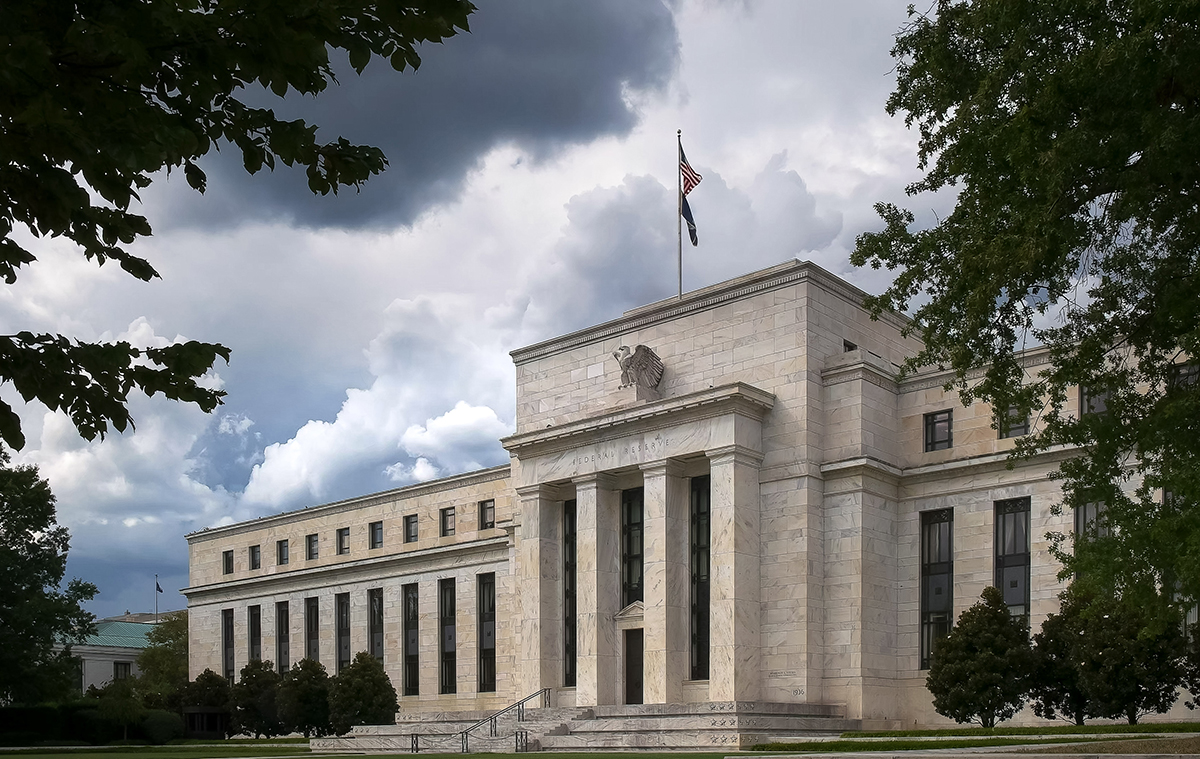
Federal Reserve
Even before the war intensified causing this energy shock, the Fed’s preferred inflation gauge showed that inflation was remaining sticky around 3%, well above the Fed’s 2% target. This isn’t great news for the Fed. Six years into a journey well above target, and now the Fed must evaluate an oil shock on top of inflation that hadn’t fully cooled on its own.
Chair Powell emphasized the uncertainty: “It'll come down to how long the current situation lasts… The economic effects could be bigger. They could be smaller… We just don't know.” The “standard learning,” he said, is to look through energy spikes, but that approach depends on expectations staying anchored — a harder proposition after years of above-target inflation, and with a conflict-driven spike that is already large enough to rattle consumers and markets.
“Six years into a journey well above target, and now the Fed must evaluate an oil shock on top of inflation that hadn’t fully cooled on its own.”
Fed Governor Chris Waller stated, if oil is “at a very high level and it stays high for months on end, then at some point it bleeds through because oil is an input into so many products,” and that’s when “you do have to respond” as it shows up in core inflation. The policy trap is a potential stagflation scenario where the Fed is forced to choose which side is deteriorating faster, inflation or employment. The Fed is surely watching explicitly for stagflation dynamics and would have to figure out which side is getting worse and for how long. At this point, the baseline expectation is now just one cut in December, but it is possible the Fed delivers no cuts this year, and even the uncomfortable possibility that the next move could even be a hike if inflation starts to progress.

Stocks
AI companies just got a wake-up call that the biggest risks aren’t just the AI making mistakes — it’s data security. There were a couple of major events related to this risk. In one case, a hack led to the potential of valuable AI training data being exposed. That’s a big deal because it could give competitors — even other countries — access to cutting-edge tech. In another case, human error led to the leaking of proprietary internal code. The big takeaway: AI companies can’t just “lock things down” and assume they’re safe. A single weak spot — whether it’s a vendor, open-source tool, or human error — can cause major, lasting damage.
For the month of March, equities were generally down regardless of market capitalization. This volatility was surely initiated by the Iran conflict and the cascading effects associated with shocks to energy prices. Foreign equities declined significantly more than US equities in March. This leads to questions around if last year’s foreign equity outperformance is sustainable or will revert back to US dominance in equity prices. With that said, the early days of April have brough swift recovery to broad equity prices. Hope for resolution to the middle east conflict is high, and equity prices have reflected that.
Bonds
The Iran conflict also impacted the bond market, weighing on bond prices as yields have generally risen. The yield on 10-year Treasury notes relative to two-year Treasuries reached the highest difference since the beginning of 2022. This steepening of the yield is primarily driven by concerns over increased government debt issuance.
Longer-term bonds were hit the hardest in March as the surging oil prices and fears of war-related government spending caused a major selloff. Shorter-term bonds were more resilient. Corporate bonds and high yield bonds also experienced declines in March. However, floating rate bank loans posted positive returns for the month. On a year-to-date basis, bonds are generally flat across the board. Yet, over the trailing one year time frame, many bond sectors are hanging on to relatively attractive total returns.
© Advisory Alpha. Registration with the SEC or a state does not constitute an endorsement of the firm by regulators, nor does it indicate that the adviser has attained a particular level of skill or ability. This content is for informational purposes only and does not intend to make an offer or solicitation for the sale or purchase of any securities. Investing involves risk, including the potential loss of principal. No investment strategy, such as asset allocation or diversification, can guarantee a profit or protect against loss in periods of declining values. All investment strategies involve risk and have the potential for profit or loss. Changes in investment strategies, contributions or withdrawals, and economic conditions may materially affect the performance of your portfolio. There are no assurances that a portfolio will match or outperform any particular benchmark. Investors should carefully consider the investment objectives, risks, fees, and expenses before investing. Any financial services firms referenced in this material do not provide tax or legal advice. Please consult with your tax or legal professional regarding specific issues prior to making a tax or legal decision.
The performance information presented in the asset category section of this report is based on equal-weighted averages of the following Morningstar Categories: US Stocks (US Fund Large Blend, US Fund Mid-Cap Blend, US Fund Small-Blend), Foreign Stocks (US Fund Foreign Large Blend, US Fund Foreign Small/Mid Blend, US Fund Diversified Emerging Mkts), US Bonds (US Fund Intermediate Government, US Fund Inflation-Protected Bond, US Fund Corporate Bond, US Fund High Yield Bond, US Fund Bank Loan), Foreign Bonds (US Fund World Bond, US Fund Emerging Markets Bond), Hard Assets (US Fund Commodities Precious Metals, US Fund Commodities Energy, US Fund Global Real Estate, US Fund Real Estate), Hybrid Assets (US Fund Convertibles, US Fund Preferred Stock).
© 2026 Morningstar. All Rights Reserved. The information contained herein: (1) is proprietary to Morningstar and/or its content providers; (2) may not be copied or distributed; and (3) is not warranted to be accurate, complete, or timely. Neither Morningstar nor its content providers is responsible for any damages or losses arising from any use of this information. Past performance is no guarantee of future results. Morningstar category data is provided for illustrative purposes only to demonstrate a hypothetical investment vehicle represented by a group of similar investments. Morningstar category data is an aggregation across actual funds contained in the category, but it is not possible to directly invest in a category. Index returns are provided for illustrative purposes only to demonstrate a hypothetical investment vehicle using broad-based indices of securities. Unmanaged indexes are not available for direct investment. All data shown does not include internal fund expenses, trading costs, financial advisor fees, commissions, or taxes. This information is not intended to predict the performance of any specific investment or security. Past performance is no guarantee of future results.
Bureau of Labor Statistics. Unemployment Rate, Total Nonfarm Employment, Labor Force Participation, Consumer Price Index, Producers Price Index. www.bls.gov. United States, Department of Commerce, Bureau of Economic Analysis. Personal Consumption Expenditures, Gross Domestic Product, Consumer Spending, Personal Income, and Outlays. www.bea.gov. Federal Reserve. Fed Funds Rate, Fed Funds Target Range, Minutes of the Federal Open Market Committee, Board of the Federal Reserve System Calendar. www.federalreserve.gov. Trump, Donald. @realDonaldTrump. Truth Social.